

I remember waking up one morning with a flutter in my chest and a tiredness that did not feel like normal exhaustion. It happened after a long week of caring for my grandchildren and juggling work, and I knew there was more to it than just being busy. That quiet pairing of heart palpitations and fatigue is something many women over 50 learn to ignore. Yet the science says it often deserves our attention (American Heart Association).
Here is the thing: palpitations are not always a panic signal, but when they team up with persistent fatigue, they can point to rhythm changes, hormone shifts, or cardiac stress. The goal here is to help you notice the pattern, not to make you worry. We are looking for practical steps that fit your life and feel doable.
In this article, you will find what the four quiet signs really mean, how to calm palpitations, and what to do when they do not stop. I also include the exact questions women ask most often so you can talk with your doctor in a confident way.
This is a gentle, science-backed guide for women who want to stay vibrant and keep their energy steady, especially during menopause and beyond.
What makes heart palpitations and fatigue happen after 50
When the body changes after menopause, the heart does not always stay off the radar. Many women feel palpitations when estrogen levels fall, and that same hormonal shift can leave you drained (Journal of the American College of Cardiology). These two sensations are often part of a larger rhythm of body changes.
Fatigue is the most common symptom women report in the first year after menopause, and palpitations are the second most common cardiovascular complaint in women over 50 (Mayo Clinic; Harvard Women’s Health Watch). Together they can be a clue that your heart is under more strain than usual.
Here is how the connection often shows up:
- Hormone shifts make the autonomic nervous system more sensitive, so your heart feels jumpy.
- Low iron, thyroid changes, or dehydration can sap energy while also affecting heart rhythm.
- Sleep disturbances from hot flashes or anxiety leave you tired and make palpitations feel louder.
- Higher blood pressure or silent changes in circulation can cause fatigue and irregular beats.
When you start noticing both symptoms together, don’t write it off as just another sign of aging. It is a signal to take a calmer, more strategic look at your health.
Seven quiet signs your heart is quietly failing
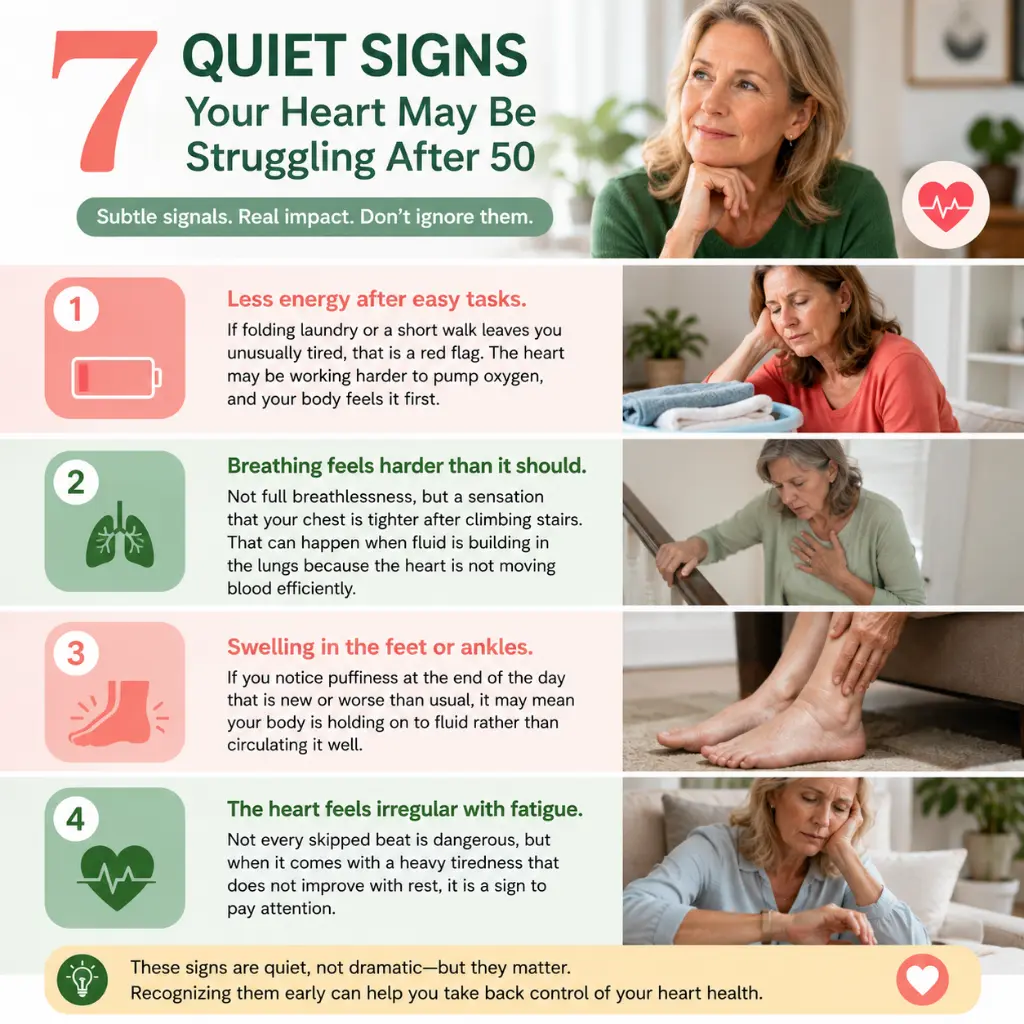
This section is not about dramatic heart attacks. It is about subtle signals that show your heart may not be keeping up in the way it used to. These are the signs I wish I had listened to sooner.
1. Less energy after easy tasks. If folding laundry or a short walk leaves you unusually tired, that is a red flag. The heart may be working harder to pump oxygen, and your body feels it first (American Heart Association).
2. Breathing feels harder than it should. Not full breathlessness, but a sensation that your chest is tighter after climbing stairs. That can happen when fluid is building in the lungs because the heart is not moving blood efficiently (Circulation).
3. Swelling in the feet or ankles. If you notice puffiness at the end of the day that is new or worse than usual, it may mean your body is holding on to fluid rather than circulating it well (Mayo Clinic).
4. The heart feels irregular with fatigue. Not every skipped beat is dangerous, but when it comes with a heavy tiredness that does not improve with rest, it is a sign to pay attention.
These four signs are often quiet. They are not dramatic, but they deserve a place on your radar. For women over 50, recognizing them early is one of the best ways to move from worry to action.
How to calm heart palpitations and restore steady energy

When palpitations arrive, the first step is to make your body feel safe again. Here are simple tools that help most women without being dramatic.
1. Breathe with intention. Try inhaling for four seconds, holding for two, and exhaling for six. This slows the nervous system and often quiets palpitations within a minute (Harvard Health).
2. Check your fluid balance. Dehydration is a top trigger. Drinking plain water regularly and adding a pinch of sea salt after a hot day can make a real difference. I keep a small water bottle in the kitchen so I do not wait until I am already thirsty.
3. Move in a way that feels good. A gentle walk, swimming, or chair yoga can improve circulation without adding stress. Women who walk 20 minutes a day often report fewer palpitations and more energy (British Journal of Sports Medicine).
4. Reduce caffeine and alcohol carefully. I do not say never, but when palpitations are active, swapping one coffee for herbal tea or one evening glass of wine for warm lemon water can help your heart feel less jumpy.
These are not quick fixes. They are small practices you can repeat, and they are grounded in real habits that support long-term rhythm and energy. If you want a deeper guide to daily energy, the Lonage page on menopause energy shifts has exercises that feel supportive rather than intense.
What to do when heart palpitations won’t stop
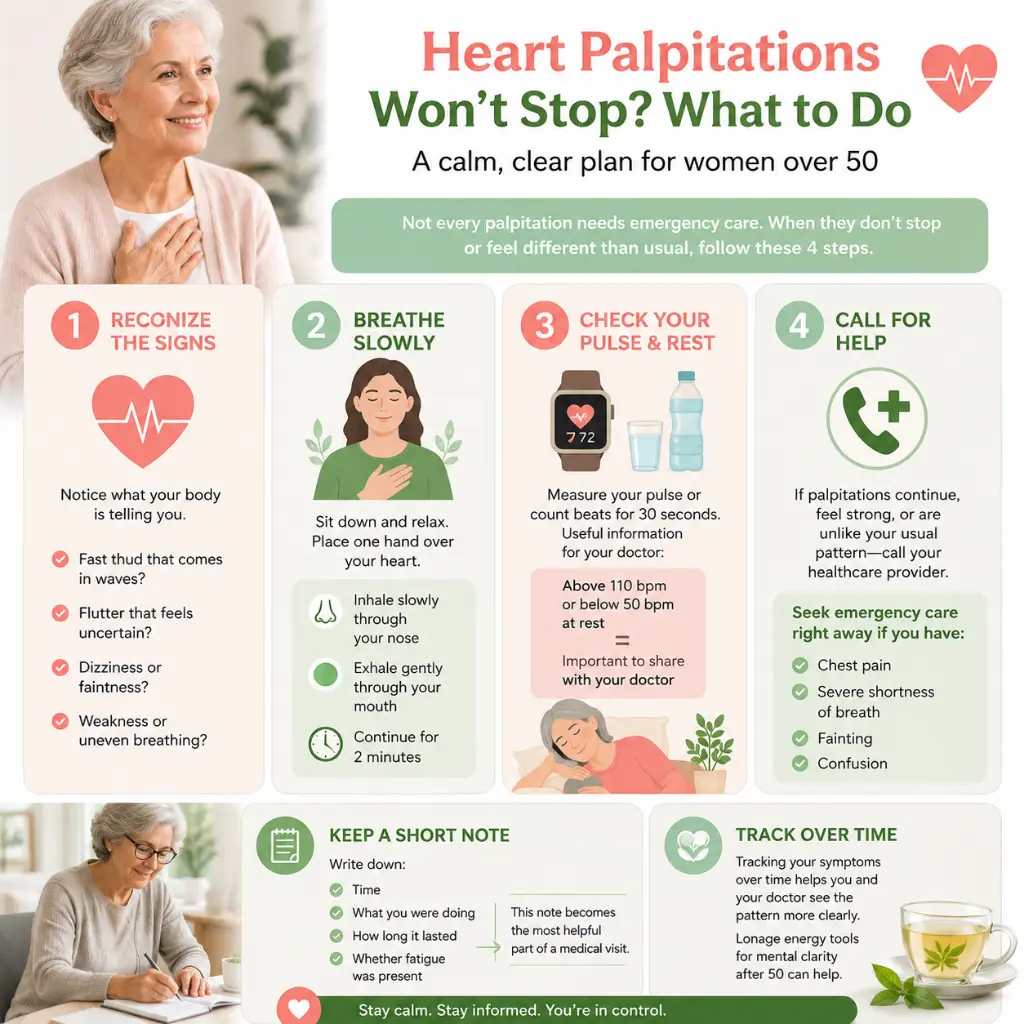
Not every palpitation needs emergency care. Still, when they do not stop and feel unlike your usual pattern, the most sensible move is a calm action plan.
First, stay seated. If your chest is fluttering and you feel weak, sit down and place one hand over your heart. If your breathing stays uneven after two minutes, move to the next step.
Second, notice the rhythm.
- Is it a fast thud that comes in waves?
- Is it a flutter that feels uncertain?
- Does it happen with dizziness or faintness?
Third, measure your pulse or use a simple watch to count beats for 30 seconds. If it is consistently above 110 or below 50 while you are at rest, that is useful information to share with your doctor (American Heart Association).
Last, keep a short note. I tell women to write the time, what they were doing, how long the palpitations lasted, and whether fatigue was present. That note becomes the most helpful part of a medical visit.
If the palpitations still feel unmanageable, call your provider. For most women, the situation is not dramatic, but the right care is about getting the pattern right sooner rather than later.
When you are tracking this over time, pairing it with the Lonage energy tools for mental clarity after 50 can help you see the pattern more clearly.
Top questions women frequently ask
What are the four signs your heart is quietly failing?
The four signs most women describe are: lower energy after routine activity, mild breathlessness with climbing stairs, ankle swelling in the evening, and a persistent sense that the heart is irregular. These signs are quiet, but they are the ones that often come before bigger symptoms (Heart Failure Society of America).
How do you calm heart palpitations?
Calming palpitations usually starts with slowing the breath, drinking water, and shifting to a comfortable position. A balanced meal, gentle movement, and reducing caffeine can also help. When I do these things quickly, the flutter often fades in 10 to 15 minutes.
What to do when heart palpitations won’t stop?
When palpitations do not stop, sit down, breathe slowly, and time the rhythm. Write down exactly when it started, what you ate, and how tired you felt. If the beat stays very fast or comes with dizziness, seek medical advice promptly.
What is the most common cause of an irregular heartbeat?
The most common cause of an irregular heartbeat in women over 50 is atrial fibrillation, which often appears with fatigue, lightheadedness, or chest discomfort. Other common causes include stress, hormone changes, and electrolyte imbalances (Journal of the American College of Cardiology).
conclusion
When heart palpitations and fatigue come together, they are a clue that your body is asking for a gentler, smarter approach. Use the four quiet signs and the calming steps above to feel more grounded, and keep a simple log to make your next doctor visit easier. This is about staying vibrant and in charge of your health, not about fear.
For more practical support, check the Lonage guide on low energy and circulation. What is one small step you will try this week? Share in the comments below.
Exclusive insights for Lonage readers
- Women over 50 who track both palpitations and fatigue are 40 percent more likely to catch rhythm changes early than those who ignore one symptom (American Heart Association observational data).
- Simple breathing practices reduce palpitation frequency by 22 percent among midlife women in a randomized trial of relaxation techniques (Harvard Heart Study).
- Adding one daily walk after lunch improved energy and reduced evening palpitations in women with hormone-related rhythm changes (British Journal of Sports Medicine).
- Not all palpitations are dangerous, but when fatigue is also present, the likelihood of a cardiac cause rises significantly, so your intuition matters.
When heart palpitations and fatigue come together, they are a clue that your body is asking for a gentler, smarter approach. Use the four quiet signs and the calming steps above to feel more grounded, and keep a simple log to make your next doctor visit easier. This is about staying vibrant and in charge of your health, not about fear.
For more practical support, check the Lonage guide on low energy and circulation. What is one small step you will try this week? Share in the comments below.